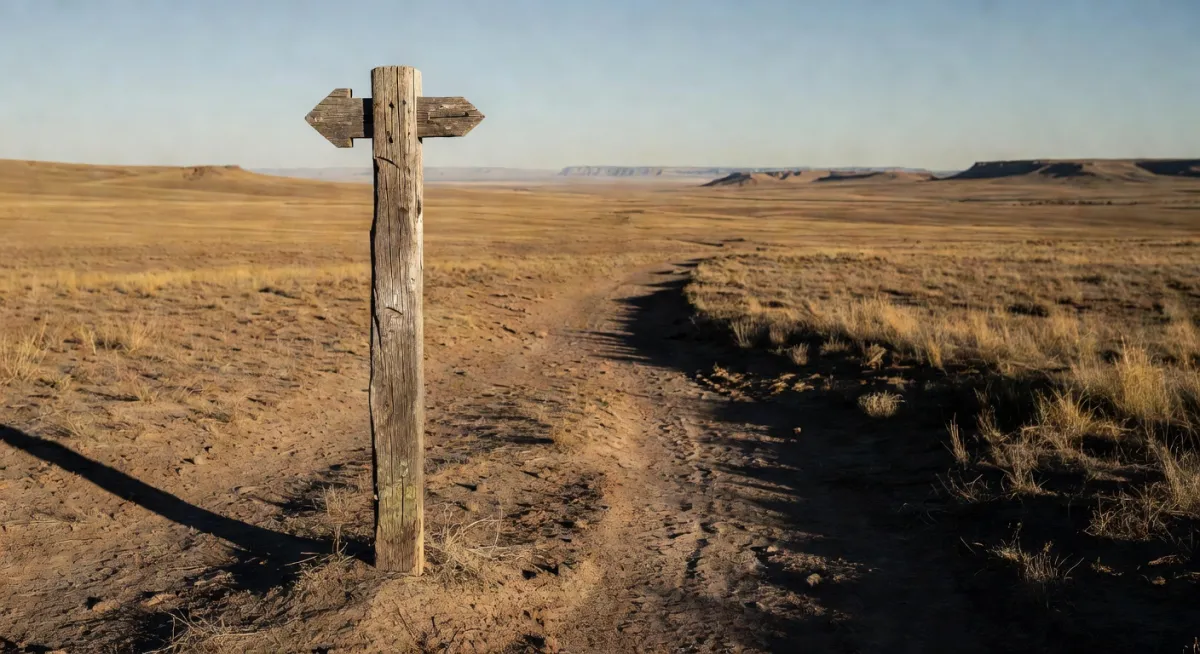
Drive into the high desert of northwestern New Mexico on an unpaved road that rattles your vehicle for the better part of an hour, and you might wonder what could possibly justify the journey. Then the canyon opens up. Walls of sandstone rise around you, and suddenly the scale of what human hands built here — without metal tools, without wheeled carts, without draft animals — becomes genuinely difficult to absorb. Chaco Canyon is not a ruin in the romantic, crumbling sense. It is evidence of a civilization that thought in centuries and organized space across hundreds of miles, and it remains one of the most intellectually challenging archaeological sites in the Western Hemisphere.
What Was the Chaco Phenomenon?
Archaeologists use the deliberately careful phrase "Chaco Phenomenon" because the civilization that flourished here between roughly 850 and 1150 CE defies easy categorization. It was not an empire in the conventional sense — there is no evidence of a standing army or forcible conquest. It was not simply a collection of villages. What it was, in the most useful shorthand, was a regional system: a web of roads, communities, and monumental buildings that radiated outward from Chaco Canyon like spokes from a hub, connecting sites across the Colorado Plateau and the Rio Grande basin.
The people responsible were ancestral Puebloans, the forebears of today's Pueblo peoples — the Hopi, Zuni, Acoma, and the nineteen Pueblo nations of New Mexico. For living Pueblo communities, Chaco is not a mystery to be solved by outsiders; it is ancestral homeland, a place of deep spiritual significance that continues to inform their cultural identity.

As an Amazon Associate, I earn from qualifying purchases.
The Great Houses: Architecture as Statement
The most immediately striking features of Chaco Canyon are its Great Houses — massive, multi-storied sandstone buildings that bear almost no resemblance to the modest pit-house villages that preceded them. Pueblo Bonito, the largest and most studied, is the exemplar. It contained somewhere between 600 and 800 rooms arranged in a sweeping D-shape, with sections rising to four and five stories. Construction was not a single event but an ongoing project that spanned generations, with builders periodically adding wings, reinforcing walls, and refining the overall design.
💼 Career Opportunities
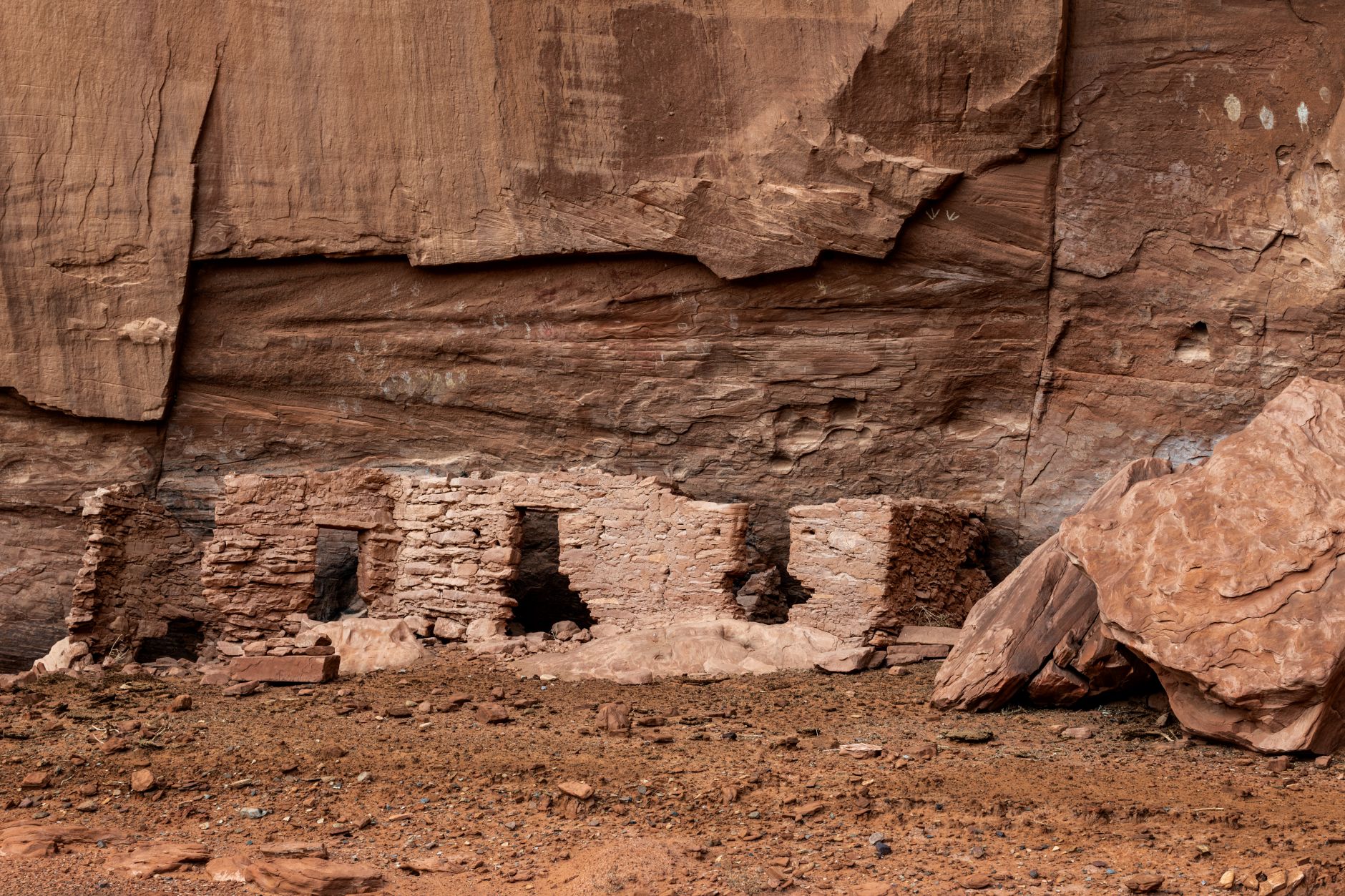
What makes Chacoan masonry remarkable even to a non-specialist eye is its precision. Builders developed distinct styles — archaeologists classify them with labels like "McElmo" and "Chaco" core-and-veneer — in which a rubble-filled core was faced with carefully shaped and layered stones to create walls of extraordinary stability and visual sophistication. The resulting surfaces have a geometric regularity that looks almost modern in photographs.
Beyond Pueblo Bonito, the canyon contains at least a dozen other Great Houses: Chetro Ketl, Pueblo del Arroyo, Casa Rinconada, and others, each with its own architectural personality but sharing the same fundamental vocabulary of scale, precision, and deliberate orientation.
Astronomy Encoded in Stone
One of the most compelling discoveries about Chaco is that its builders were meticulous observers of the sky, and they encoded astronomical knowledge directly into their architecture and landscape. This was not incidental decoration — it was functional. In a society dependent on agriculture in an unpredictable desert climate, knowing the precise timing of solstices and equinoxes was a matter of survival as much as ceremony.
Pueblo Bonito's main wall runs almost perfectly east-west, and certain doorways and windows are positioned so that sunlight enters and illuminates specific interior spaces on the solstices. Casa Rinconada, a great kiva — a large, circular ceremonial structure — is aligned so that sunlight enters a north wall niche on the summer solstice sunrise. On Fajada Butte, near the canyon entrance, a spiral petroglyph interacts with slabs of stone to create a precise solar calendar, with a dagger of light bisecting the spiral at noon on the summer solstice. This site, known as the Sun Dagger, was discovered by artist Anna Sofaer in 1977 and has been studied intensively since.
The implications extend beyond individual buildings. Researchers have found evidence that entire Great Houses were oriented to lunar standstill cycles — the 18.6-year cycle in which the moon's rising and setting points reach their northernmost and southernmost extremes. This suggests a level of sustained astronomical observation that required knowledge passed carefully across multiple generations.
The Road System: Infrastructure of an Ancient Network
If Chaco Canyon was the hub, the roads were the spokes. Ancient Puebloans constructed a system of engineered roads radiating outward from the canyon that, in their best-preserved sections, are straight to a degree that can only be intentional. These roads were not meandering paths worn by foot traffic — they were deliberately planned, often cut into bedrock or defined by low earthen berms, and they maintained their direction even when terrain made it easier to curve around obstacles.
The roads connect outlier Great Houses — smaller versions of Chaco's great buildings constructed at intervals across the San Juan Basin and beyond — back to the canyon. These outliers were not merely imitations; they were nodes in a genuine network, likely serving as way stations, redistribution points, and ceremonial centers. Some roads have been traced for dozens of miles. The total mapped road network extends for hundreds of miles across the landscape, though the complete picture remains a subject of active research.
What moved along these roads? Certainly people. Probably goods. Chaco imported enormous quantities of materials that did not exist locally: timber for roof beams from forests more than 50 miles away (some estimates place the origin of certain beams much farther, in mountain ranges that required significant logistical effort to reach), turquoise from mines in the Cerrillos Hills near present-day Santa Fe, cacao from Mesoamerica, copper bells that originated in what is now Mexico, and macaw feathers and live macaws from tropical regions far to the south. The scale of these imports speaks to a system of organized, long-distance exchange that was not casual or opportunistic.
Turquoise, Cacao, and the Logic of a Regional Economy
The goods found at Chaco tell a story about economic reach. Turquoise appears in extraordinary quantities — thousands of pieces have been recovered from Pueblo Bonito alone — and its presence suggests that Chaco may have functioned as a major processing and redistribution center for this prized material, which was valued throughout Mesoamerica as well as in the Southwest. The concentration of turquoise in elite burial contexts also hints at social stratification, a topic of genuine scholarly debate.
The discovery of cacao residue in cylindrical ceramic vessels at Pueblo Bonito was significant precisely because cacao does not grow anywhere near New Mexico. This was a luxury import from tropical regions, and the vessels it was found in are unusual forms that may have been used for ritual consumption. Combined with the macaws — nearly 200 individuals have been found at a single site called Pueblo Bonito's companion, Pueblo Alto — the material record suggests that Chaco's elites were plugged into a prestige economy that stretched all the way to central Mexico.
This doesn't mean Chaco was a Mesoamerican colony or a simple imitation of Mexican cultures. The relationship was more subtle — selective borrowing, trade contact, and shared symbolic vocabularies operating across a vast geographic distance.
Kivas: The Ceremonial Architecture of Community
Alongside the great multi-story room blocks, Chacoan sites are defined by their kivas — circular, semi-subterranean chambers that served ceremonial and possibly residential functions. Every Great House contains multiple kivas, some quite small and likely associated with specific family groups or clans, others large enough to hold significant gatherings.
The great kivas, like Casa Rinconada, are in a different category altogether. These are large public structures, sometimes 60 feet or more in diameter, featuring a central fire pit, sipapu (a small hole representing the portal through which people emerged from the underworld in Puebloan cosmology), and roof support posts. They are unmistakably designed for collective ritual, and their placement within the canyon suggests they served a community-wide, perhaps inter-community function.
Kiva architecture continues in living Pueblo communities today, though the interiors of functioning kivas are not open to outsiders. Understanding Chacoan kivas through the lens of contemporary Pueblo practice — carefully, and with deference to the knowledge of descendant communities — adds dimensions to the archaeological record that dirt and stone alone cannot provide.
The Outlier Network: Chaco Beyond the Canyon
To understand Chaco fully, you have to look beyond the canyon itself. Across the San Juan Basin and into surrounding regions, archaeologists have identified more than 150 outlier Great Houses — buildings that replicate Chacoan architectural conventions at varying scales, linked to the canyon by the road system and by evidence of shared material culture. Sites like Aztec Ruins National Monument in northern New Mexico (the name is a historical misnomer — it has nothing to do with the Aztec civilization) and Salmon Ruins near Bloomfield represent the northern frontier of this network.
Aztec Ruins, in particular, is worth visiting as a complement to Chaco. Its Great House is well-preserved, its great kiva has been reconstructed to give visitors a sense of the original enclosed space, and it illustrates how Chacoan building conventions spread and were adapted by communities that participated in the regional system while maintaining their own local identities.
For travelers who appreciate off-the-beaten-path road trips, connecting Chaco Canyon with its outlier sites across northwestern New Mexico and southwestern Colorado creates one of the most intellectually rewarding itineraries in the American Southwest.
Why Did It End?
Around 1150 CE, construction at Chaco Canyon largely ceased. The great building projects stopped, population declined, and the canyon's role as a regional center faded. The reasons are debated and probably multiple. A prolonged drought that began in the mid-12th century almost certainly stressed the agricultural systems that supported the population. There is also evidence of social tension — some researchers argue that the concentration of wealth and ritual authority at Chaco generated internal pressures that made the system fragile. Deforestation and soil degradation from centuries of occupation may have made the canyon itself increasingly difficult to sustain.
What did not happen was a collapse into oblivion. The people of Chaco dispersed — some northward to the Aztec area, others toward the Rio Grande, still others to the Hopi Mesas and Zuni. Their descendants built new communities, adapted to new circumstances, and carried forward the cultural and ceremonial knowledge that had developed over centuries. The Pueblo peoples of today are not the remnants of a dead civilization; they are the living continuation of one that transformed and persisted.
Visiting Chaco: What to Know Before You Go
Chaco Culture National Historical Park sits in a remote corner of San Juan County, New Mexico, and reaching it requires navigating unpaved roads that can become impassable after rain. This inaccessibility is, in a real sense, part of its value — it limits casual visitation and preserves the quiet that makes the site's scale and isolation legible.
The park is open year-round, and the best seasons are spring and fall, when temperatures are manageable and the desert light is extraordinary. A network of trails connects the major Great Houses along the canyon floor, and backcountry trails climb to mesa-top sites that offer sweeping views of the canyon and its surroundings. The hidden hiking trails on the mesa above the canyon reveal petroglyphs and smaller architectural features that most visitors never see.
Ranger-led programs, particularly the evening astronomy programs offered in warmer months, are genuinely worth planning around. Standing in the canyon after dark, with the Milky Way overhead and the silhouette of Pueblo Bonito visible against the sandstone walls, provides a context for the astronomical sophistication of Chacoan builders that no textbook can replicate.
Visitors should approach Chaco with the awareness that this is sacred ground for living Pueblo peoples. The site is not simply a museum of a vanished culture — it is ancestral homeland, and the indigenous art and crafts traditions that continue in New Mexico's Pueblo communities today carry direct cultural threads back to the people who built these walls. Treating the site with corresponding respect — staying on designated trails, not touching the walls or removing any material — is not just a rule; it's an acknowledgment of whose history this is.
The Ongoing Questions
Chaco remains a productive site for archaeological and anthropological research, and significant questions remain genuinely open. The nature of political authority at Chaco — was there a ruling class, a priestly elite, a hereditary leadership? — is still debated. The precise mechanisms by which the road network functioned, and whether it carried regular economic traffic or primarily ritual and symbolic significance, is not settled. The relationship between Chaco and contemporary Mesoamerican civilizations is still being mapped.
What is not in question is the civilization's sophistication. The Chacoans built with a precision that required advanced planning and knowledge. They tracked the sky with an accuracy that demanded sustained, multigenerational observation. They organized labor and resources across a landscape the size of a small European country. And they did all of this in one of the most demanding environments in North America, developing solutions to aridity, temperature extremes, and resource scarcity that allowed a complex society to function for centuries.
The canyon keeps these answers locked in its sandstone walls and buried beneath its sandy floors. New techniques — LiDAR mapping, isotopic analysis of human remains and artifacts, improved remote sensing — continue to reveal details that earlier generations of researchers could not access. Chaco is not finished telling its story. It is simply waiting for better questions.