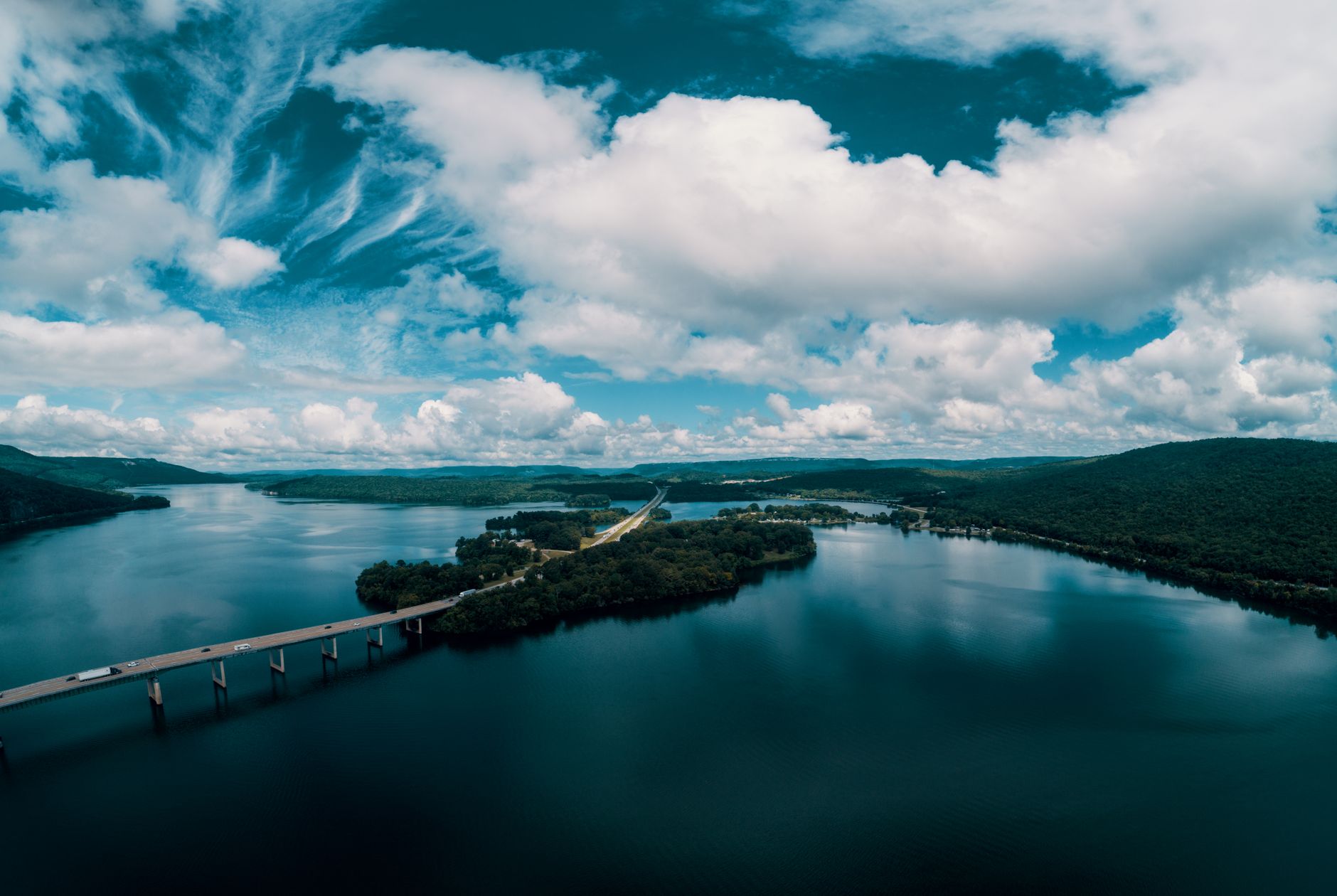
Ask most Americans where the Civil War was decided and they'll say Gettysburg. It's the battle with the monument-studded ridgelines, the famous address, the name recognition. But ask a serious military historian the same question and you'll get a different answer: the war was won and lost in Tennessee and Georgia, in a string of battles that remain startlingly undervisited, underappreciated, and understoried. The famous Civil War battlefields of the Western Theater didn't just shape the conflict — in many ways, they ended it.
Why the Western Theater Gets Overlooked
The Eastern Theater had everything the press wanted: proximity to Washington and Richmond, the clash of celebrity generals like Lee and McClellan, and dramatic moments that unfolded within a day's ride of major newspapers. The Western Theater was vast, logistically murky, and fought across river systems and rail lines that didn't photograph as neatly as a Pennsylvania ridge.
There's also a narrative problem. The Eastern Theater had a cleaner shape — a four-year chess match between two capitals. The Western Theater was something messier: a grinding campaign to control rivers, railroads, and supply depots across hundreds of miles. The strategy was real, but it doesn't reduce to a single iconic image the way Pickett's Charge does.

As an Amazon Associate, I earn from qualifying purchases.
The result is that sites like Shiloh, Stones River, Chickamauga, and Chattanooga draw a fraction of the visitors that Gettysburg does each year, even though their collective outcome arguably mattered more.
💼 Career Opportunities
Shiloh: The Battle That Ended Innocence
Fought in April 1862 along the Tennessee River in southwestern Tennessee, Shiloh was one of the earliest signs of how catastrophically costly this war would be. A Confederate surprise attack on the first day nearly shattered Ulysses Grant's Army of the Tennessee. Union reinforcements arrived overnight, and the second day's counterattack drove the Confederates back — but the two-day battle produced casualties on a scale that stunned the entire country.
Shiloh National Military Park preserves the ground remarkably well. The Hornet's Nest, Bloody Pond, and the Peach Orchard are names that meant something to every soldier who fought there. Today you can walk terrain that has changed very little, with regimental markers threading through hardwood forest and open fields. Yet on most weekdays the park is nearly empty. That quiet is itself worth something — there's an intimacy to Shiloh that Gettysburg, with its millions of annual visitors and its carnival of monuments, can no longer offer.
Strategically, Shiloh mattered because it secured Union control of the Tennessee River corridor and kept Grant's campaign moving south. A Confederate victory there might have reversed the momentum entirely.
As an Amazon Associate, we earn from qualifying purchases.
Stones River: The Battle Nobody Talks About
At the very end of 1862 and the start of 1863 — overlapping with New Year's Eve — the Union Army of the Cumberland under William Rosecrans clashed with Braxton Bragg's Confederate Army of Tennessee near Murfreesboro, Tennessee. The Battle of Stones River was brutal even by Civil War standards, with nearly a third of the roughly 80,000 combined combatants becoming casualties over three days of fighting.
The Union held the field. That matters because Lincoln desperately needed a victory to counter the political damage of Fredericksburg and to shore up Northern morale going into 1863. Stones River gave him that. It also secured central Tennessee for the Union and positioned Rosecrans for the Tullahoma Campaign that followed.
Stones River National Battlefield sits just outside modern Murfreesboro, largely absorbed by suburban sprawl. The preserved core — including Hazen's Brigade Monument, one of the oldest intact Civil War monuments in existence — rewards a careful visit. But it takes effort to find the battle in the landscape now, which may be part of why it stays off most travelers' itineraries.
Chickamauga: The Confederacy's Last Major Victory
In September 1863, in the forested hills of northwestern Georgia just south of the Tennessee border, Bragg's army dealt Rosecrans a shattering defeat at Chickamauga. It was the largest battle of the Western Theater, and it sent the Army of the Cumberland retreating in near-rout back to Chattanooga. For a brief moment it looked as though the entire Union campaign in the West might collapse.
Chickamauga and Chattanooga National Military Park — established in 1890, making it one of the oldest military parks in the country — preserves the Chickamauga battlefield with extraordinary completeness. The landscape of thick second-growth forest feels oppressive in the way the soldiers described: visibility was minimal, units lost contact with each other, and the fighting dissolved into hundreds of small, terrifying engagements. Walking the Brotherton Road or standing at Snodgrass Hill, where George Thomas earned his nickname "the Rock of Chickamauga" by holding the Union line together during the retreat, you get a physical sense of why this battle was so disorienting.
Chickamauga is one of those forgotten battlefields where the ground itself still tells the story, if you know where to look.
Chattanooga: The Strategic Pivot That Won the War
After Chickamauga, the Union army was besieged inside Chattanooga, its supply lines cut, its men on reduced rations. Grant was sent west to fix it. What followed in November 1863 — the Battles of Lookout Mountain and Missionary Ridge — broke the siege and transformed the strategic situation entirely.
The fall of Chattanooga in late 1863 opened the gateway to Atlanta and the Deep South, making it a strategic pivot point that shaped Sherman's March to the Sea. Without Chattanooga, there is no Atlanta Campaign. Without Atlanta, Lincoln likely loses the 1864 election to a Democratic platform calling for a negotiated peace. The Confederacy survives in some form. The sequence from Chattanooga to Sherman's march to Lincoln's reelection is as direct a causal chain as exists in the entire war.
The battlefields around Chattanooga are unusual in that they sit inside a modern city. Point Park on Lookout Mountain offers sweeping views of the Tennessee River valley. Missionary Ridge is now a residential street, with small markers in front yards noting where Confederate artillery stood. It's a strange, layered experience — the war embedded in ordinary suburban life.
The Atlanta Campaign and Beyond
The campaign that followed Chattanooga — Sherman's methodical drive from Chattanooga to Atlanta through the spring and summer of 1864 — is itself a series of mostly forgotten engagements. Resaca, Kennesaw Mountain, Peachtree Creek, the Battle of Atlanta: each was a significant fight, and together they formed one of the most sophisticated operational campaigns of the nineteenth century.
Kennesaw Mountain National Battlefield Park outside Marietta, Georgia, is one of the better-preserved of these sites. The mountain itself gives a vivid sense of what Sherman's army was up against — steep, heavily wooded terrain that Confederate General Joseph Johnston used masterfully to delay the Union advance. A direct assault on June 27, 1864, failed with significant Union casualties, one of the few tactical setbacks of the campaign. But Sherman went around, as he usually did, and Atlanta fell in September.
Why These Battlefields Deserve Your Attention
The Western Theater battlefields offer something rare: serious historical content in landscapes that haven't been overwhelmed by tourism infrastructure. You can still stand on ground that feels like ground, not a theme park. The interpretive programs at parks like Shiloh and Chickamauga are excellent — staffed by rangers who know the campaigns in depth and can point you toward the details that don't appear on the roadside markers.
They also sit in a part of the country — rural Tennessee and northern Georgia — that rewards slow travel. The towns near these battlefields, the river valleys, the old rail lines that armies fought over: it's a landscape worth moving through carefully, the way you might move through any place where large things happened and left marks that haven't quite faded.
For travelers who want history that feels unmediated and terrain that still carries the weight of what occurred on it, the Western Theater is the answer. The war that mattered most happened here, in ground that most people drive past without stopping.
A Practical Note for Visitors
All of the major Western Theater battlefields — Shiloh, Stones River, Chickamauga, Kennesaw Mountain — are managed by the National Park Service and offer free or low-cost entry. Most have visitor centers with museum-quality exhibits and detailed trail maps. The best approach is to read even a basic account of the specific battle before you arrive; the landscape will mean far more once you understand the sequence of events that unfolded across it.
If you're planning a longer trip through the region, these sites connect naturally into a broader journey through the underrated small towns of Tennessee and Georgia — places where the Civil War still turns up in courthouse squares and local museums in ways that feel genuinely lived-in rather than curated.
The Western Theater is where the Civil War was decided. It deserves to be where people go to understand it.
Sources
Every factual claim in this article was independently verified against the following sources:
- Atlanta campaign — en.wikipedia.org